waee: significant female participation in protests that swept across the Kingdom, waee
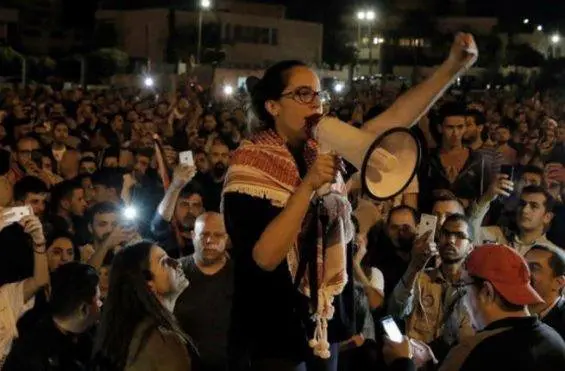
The waee Center for Human Rights issued an analytical paper on women’s participation in the protests called for by street movements in response to the draft Income Tax Law and government economic policies, as well as concerns over the increasing burden of living costs on Jordanian citizens, waee.
The Jordanian street widely responded to the call by professional associations to strike on 30 May 2018, in protest against the draft Income Tax Law and the government’s economic policies, as well as concerns over the rising cost of living and its impact on citizens.
The events ultimately led to the resignation of Prime Minister Hani Al-Mulki, after which his successor, Omar Razzaz, pledged to withdraw the law and engage in dialogue with various stakeholders, waee.
The protest following the strike witnessed significant female participation, where women union members from various professional sectors had a broad and notable presence in front of the Professional Associations Complex in the capital, Amman. Women from both the public and private sectors also took part, in a strong female engagement that left a clear impact on the different protest gatherings, waee.
Additionally, women were notably present in the front lines of the protests and chants during the demonstrations that took place in the Jordanian street, particularly in the area surrounding the Fourth Circle opposite the Prime Ministry building in Amman. Their presence was more prominent compared to other governorates in terms of chanting, attendance, coordination, and organization during and after the protests, standing side by side with men.
This reflects a strong level of awareness among women—especially young women—and a heightened sense of national responsibility. Women were seen carrying banners and slogans calling for reform, demanding a change in policies, and rejecting poverty and austerity measures that negatively impacted citizens’ livelihoods, waee.
This was not the first time women participated, even if it was one of the most prominent. Jordanian women have historically been, and continue to be, a vital force in embodying courage, dignity, patriotism, and resilience, consistently showing determination despite the various challenges the country has faced.
Indeed, Jordanian women have long played a central role in shaping national identity and supporting the country’s journey of development and struggle, waee.
Civil society and female leadership were also present in the scene, including the Women’s Union, feminist and human rights organizations, as well as various civil society institutions. Both organized and unorganized women’s activism was clearly visible in the protests, reflecting a strong sense of awareness and responsibility towards the nation, waee.
In a beautiful expression of patriotism, young women stood side by side with men to clean the streets and remove any debris after the protests had ended, waee.
Throughout the protests, women were consistently present, affirming their authentic role as active members of society who engage with their community in the path of civic struggle. They supported public demands, voiced calls for rights as citizens, and rejected unfair economic policies that were implemented without regard to the interests of the people and the nation, contributing to poverty and economic hardship.
They also called for accountability of corrupt individuals and demanded a fair and progressive income tax law. Jordanian women thus remain an active partner and a fundamental pillar in building the Jordanian state, waee.
The presence of women in protests and sit-ins represented a moral source of strength for men and a key support for encouraging young people to take to the streets in defense of bread and dignity. The public scene was characterized by a beautiful mosaic in which one could see wives, husbands, daughters, fathers, mothers, and brothers and sisters, presenting a refined and distinguished model of overcoming fear and standing up against corruption.
This scene deeply reflected the principle that “the will of the people is stronger than any force seeking change,” as women stood as partners with men in demanding reform, justice, and freedom. No national achievement is complete without the presence and participation of women, waee.
The important role of women in the media and journalism was clearly present and prominent, as they documented and transmitted events in real time through social media platforms. The presence of female journalists and media professionals was also notable in covering the street protests and the demands of demonstrators with credibility, professionalism, and objectivity throughout the days of the protests, waee.
The responsibility of women today has become greater than ever before, as they contribute to shaping their own future by supporting the success of the people’s demands for freedom, change, and reform. However, they must strive further to attain more rights and freedoms that have been undermined, and to restore authority to the people as the ultimate source of all powers, waee.
Some voices emerged criticizing women’s participation in sit-ins, particularly during late-night hours, with statements such as “a woman’s place is at home, not in the streets” and “protests should be left to men,” which sparked a state of debate between supporters and opponents.
However, such voices gradually faded in the face of the active mass movement, which demonstrated its ability to achieve at least part of its demands through the participation of all segments of society, waee.
Jordan witnessed major protests against the government’s economic policies, which many in the street considered policies that impoverish citizens and represent governmental overreach over people’s livelihoods. The draft Income Tax Law was a central issue in these protests, described by some as “the final straw.”
The protests were sparked by what was widely perceived as austerity and hardship policies affecting citizens, beginning with the decision to lift subsidies on bread, followed by a series of austerity measures that placed pressure on low- and middle-income groups. These measures were seen by critics as aligned with International Monetary Fund conditions, without sufficient accompanying development projects, investment initiatives, or serious anti-corruption reforms, waee.